In honor of International Women’s Day 2022 and this year’s IWD theme of #BreakTheBias, CFI is focused on shedding light on the biases that hinder the advancement of women’s financial inclusion. CFI applies a gender lens across all its research, working to understand and address barriers to women’s financial inclusion and economic empowerment.
Online Safety and Security Risks Present Barriers for Women’s Financial Inclusion
Although the pandemic has accelerated the use of digital financial services and mobile phones provided opportunities to pivot businesses, stay connected, and continue working, mobile ownership remained flat among women in low- and middle-income countries during COVID. As we look to make progress on women’s financial inclusion, we must also look at what is needed to help women feel safe and able to use mobile financial services.
Safety and security are crucial components for online gender equity. And are a necessary and first step to using digital financial services. The GSMA Mobile Gender Gap Report 2021 reported safety and security in accessing mobile internet as the third barrier to women’s mobile internet access, behind literacy and affordability. As digital financial services become commonplace, ensuring safe and secure online spaces is a crucial first step towards inclusive finance for women. However, safety and security risks present barriers to mobile adoption for many women, ultimately impeding women’s access to and trust in mobile financial services.
Why Digital Safety and Security Are Especially Concerning for Women
While there are risks to online environments that can make anyone – man or woman – feel unsafe, it is important to understand that these risks can often be heightened for women. Online environments can mimic and exacerbate risks in the physical environment that stem from offline gender norms and discrimination against women. The internet poses numerous risks – ranging from a higher potential for fraud, surveillance, and identity theft, to targeted violence, misuse of personal images and data, and sharing inappropriate content or behavior. The fear of being unable to cope with any of these – combined with the lack of redressal options and the absence of affordable legal recourse mechanisms – can lead to feeling unsafe.
Online environments can mimic and exacerbate risks in the physical environment that stem from offline gender norms and discrimination against women.
Cultural norms and ideologies that limit women’s freedom of movement often translate into restrictions in accessing the internet, or even having access to a mobile phone. Others face consequences, or social censure from having an online presence reinforcing norms experienced in the real world. These barriers shape women’s online behavior and create significant obstacles for usage, exacerbating the mobile gender gap.
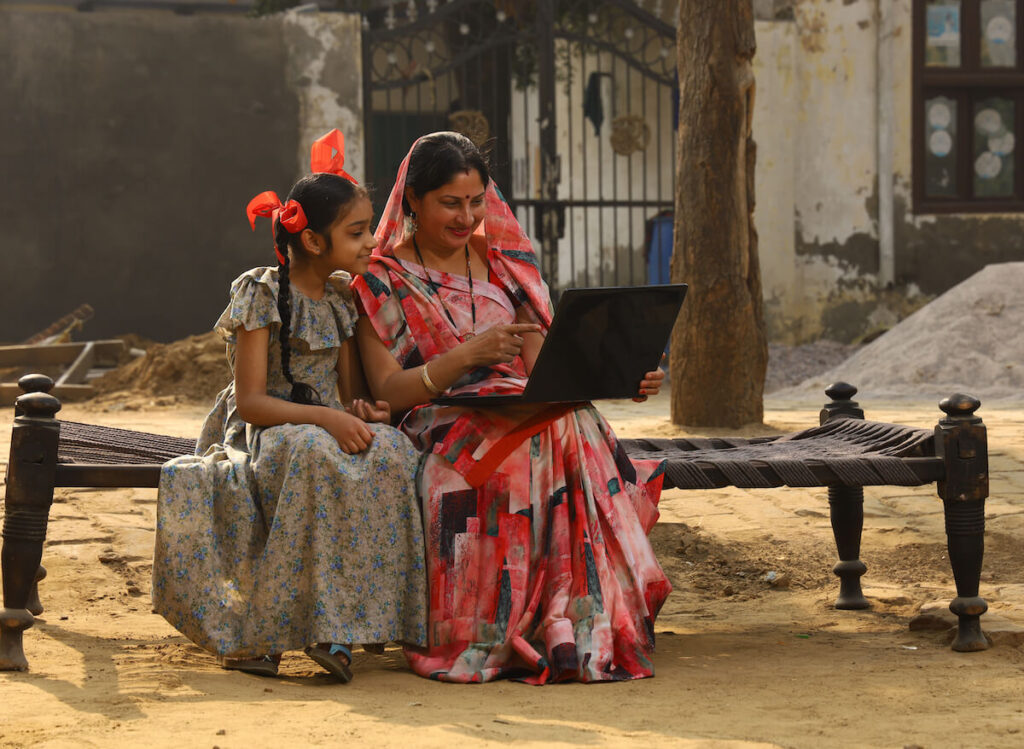
In addition to mimicking and exacerbating risks online, gender norms in the real world can shape one’s online behavior. Research in India showed that the very act of going online can violate expectations of a woman’s behavior in society. Women are told they should not talk to men outside their family or be accused of “improper” behavior. The fear of being discovered online by family or extended family forces women to minimize their online footprint and reduce their internet usage.
In societies with hegemonic gender ideologies, the woman is almost always blamed for everything that goes wrong.
Furthermore, the perception of women being more vulnerable is reinforced by a lack of clarity on recourse mechanisms, which often do not exist. If recourse mechanisms do exist, in some cultural contexts, women may be blamed for putting themselves in a compromising situation or may not have the courage to speak up. Finally, countering online harassment can be harder for women because it is often subversive, can be conducted through one-on-one interactions, and is difficult to track and trace since abuser identities are often hidden or fake. In societies with hegemonic gender ideologies, the woman is almost always blamed for everything that goes wrong.
What Can Be Done to Support a Safe and Secure Online Environment for Women
Creating a safe and secure online environment for women to transact will need cross-sector collaboration and will require efforts from multiple stakeholders. Below are a few ideas for ways to better support women with online and digital services.
1. Financial service providers or fintechs that develop apps have a responsibility to ensure that principles of necessity and proportionality are followed when seeking user data.
Requesting access to photographs on phone galleries, or getting access to phone contacts should not be automatic, and must be restricted for access and use by employees of a fintech who use this to collect overdue loans, or follow up on payments. This can prevent misuse and harassment that specifically targets women.
2. Design easier complaint processes.
IPA’s research in Nigeria shows that even with digital products, customers tend to resolve challenges in person. And when complaints remain unresolved, usage tends to drop. Apps should have easy-to-access safety mechanisms that can help them block calls or alert the provider through a help button, in case of an emergency. Additionally, customers who have lower income and education levels are less likely to use formal redress channels. Initiatives like ‘Digital Safe-tea’, an interactive fiction game about digital safety issues, can help alert women on rules to follow in an online or digital world. Using peer learning mechanisms also could help women learn how to navigate digital environments safely.
3. Create a conducive policy and legal environment for data rights.
Sharing information may be crucial to enable access to digital financial services. However, FSPs, MNOs and other actors involved should have data sharing policies and be held accountable when this data is misused by their employees or agents, or when there are data breaches. When customers receive calls from people who claim they are from a specific company or have access to personal information, there should be a way to verify the information or report it to the company and a central authority that can adjudicate on the breach of rights.
Women will only trust the digital environment if they feel safe enough to report online incidents and if these reports are acted upon.
Women will only trust the digital environment if they feel safe enough to report online incidents and if these reports are acted upon. Inclusion can only take place if there is a common culture that respects all customer voices. We need to better encourage women, or anyone facing abuse and discrimination, that if they see something, they need to say something. As we work to break the biases that hinder women’s financial inclusion and, ultimately women’s economic empowerment, ensuring safe and secure online spaces is a crucial first step.
Authors


Explore More