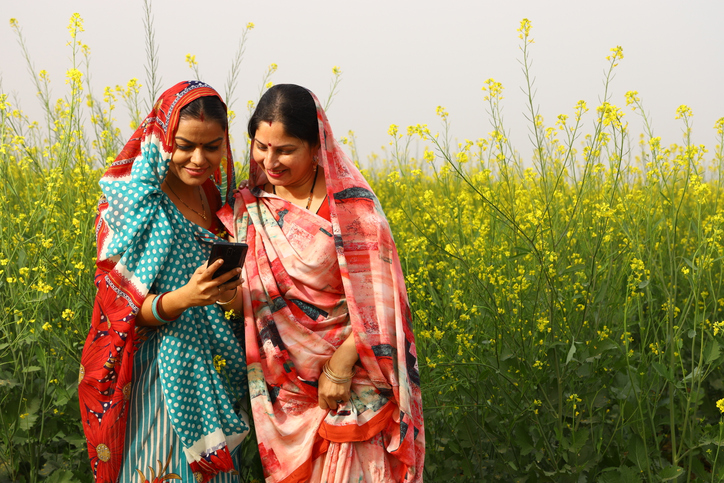
Technology, like finance, is a double-edged sword. Both offer enormous benefits, yet both also have the capacity to inflict significant harm when used incorrectly or with inadequate safeguards. At the intersection of gender, technology, and finance lie opportunities and risks that require our attention. After several years of plateauing at six percentage points, the global gender gap in financial account ownership has finally begun to narrow, driven primarily by growing access to mobile phones. On the flip side, risks have also been rising, often at a rate faster than access. Women, for example, remain more vulnerable than men to cyberfraud and social engineering scams, as well as online harassment. AI generated deep-fakes and impersonation scams are only exacerbating the challenge. Notably, 62 percent of women customers report “security fears” and “fear of fraud” as primary reasons for not using digital financial services.
While the urgency of addressing risks and potential harms, remains paramount, technology (when it works well) can also create moments of joy. These moments can inform more effective strategies and approaches to advance financial inclusion for women. This article explores moments when usage leads women to experience “digital joy,” defined here as moments when there are sufficient safeguards to mitigate risks and the use of the service generates greater upside value to the user. Importantly, such moments cannot be sustained or scaled unless technology and financial services providers intentionally design with women’s experiences and needs in mind.
The Inclusion Vector
Individuals, society, and culture can shape technology and finance as much as technology and finance shape them. And yet, overly simplistic and techno-deterministic approaches tend to overlook the shaping of technology and finance by society. To better understand their interplay, examine all three — finance, technology, and society — along a three-dimensional space. In theory, moments of digital joy should occur along an “inclusion vector” that not only delivers value to members of society but also delivers value to the technology and finance providers. Identifying the points at which services can deliver value to women and offering services accordingly should, in theory, help bridge the gender gap and still deliver greater value to all users. A true moment of digital joy is one that can be sustained and amplified because the use of technology and finance benefits society and delivers value to all three in equal proportion.
Overemphasizing any single dimension can create a disruptive imbalance. For instance, an overemphasis on technology may cause greater efficiency but often comes at the cost of business value and harms users. Similarly, a higher weight toward society may erode profitability and restrict technological innovation.
But what does this mean in the real world? And how do we get there?
Designing for Moments of Digital Joy
The world has not been designed with women in mind. Understanding the challenges this poses for half the population, and the biases that underlie the design of many products and services, is a starting point. For instance, smartphones are an important first step to accessing digital financial services, yet most smartphones are designed for men’s hands, making it harder to tuck into non-existent or smaller pockets, and resulting in other challenges because of their weight.
Product designers have started to pay attention — the Keecoo K1 phone, for example, has a hexagonal design and is made for smaller hands. Of course, it is important to caveat that the phone is hardly perfect, offering lower computing capabilities because it is smaller and lighter, which replaces one challenge with another, impacting its potential to meaningfully address the gender parity issue. Along a similar vein, voice recognition software could theoretically help bridge the gender gap since women who lack digital literacy and navigation skills can still use voice to access services, but most voice recognition software does not work efficiently for women and work remains to be done in building underlying local language libraries that can work with a variety of accents and dialects.
In combing through the existing literature in the world of digital financial services, three scenarios emerged that can lead to moments of digital joy for women:
1. When relationships and social capital are strengthened
One example of the interplay between technology, financial services, and society is when Safaricom in Kenya introduced mobile phones and airtime. Airtime was loaded by purchasing prepaid cards, often sold at little agent stalls for as low as 10 Kenyan shillings. But airtime was precious and if you were a busy small entrepreneur, you could run out of it quite quickly and needed to “top-up” constantly. Safaricom then introduced the idea of sambaza, a Swahili word that means “to distribute,” which allowed registered Safaricom users to send a part of their stored airtime to other registered users. Kenyan society took the concept and used it in different ways that helped them build social capital. Want to borrow water from a neighbor’s tank? Pay with sambaza. Want to repay a debt from a past interaction or send a gift? Use sambaza.
In her work mapping social networks, anthropologist Sibel Kusimba found that e-money remittances created dense networks of reciprocal transfers in the mother-child unit she calls a “hearthhold,” referencing the social power that African women derive from food and cooking. In India, research shows that women micro-entrepreneurs used UPI, India’s instant interoperable payments, in a similar fashion to strengthen their social capital and build social bridges.
2. When technology is leveraged for flexibility and convenience
Access to a phone, internet, and digital financial services allows many women the necessary flexibility to work and learn during “quiet times” during the day or later at night. Initiatives like Google’s Internet Saathi have been facilitating rural women’s access to the internet, which is catalyzed by growing language libraries and investments in local language interfaces. The initiative currently reaches about 1.5 million women across rural regions in India and is replete with stories like Rohini’s. Rohini Patil grew up in Satara district in Maharashtra in a family of farmers. Through Google’s internet Saathi program, Rohini discovered YouTube, and watched videos on bee-keeping to teach herself. Today, she is one of Maharashtra’s first women bee-keepers and runs a successful commercial enterprise that markets certified wild organic honey.
The reality of many women across the world today is the inability to maintain regular work hours. Housework is seen as their primary responsibility and many women are criticized for taking up other work, or using a phone excessively. As one respondent said when interviewed in a study on crowd work: “My family members definitely had complaints around my work. They were saying things like how I’m leaving every other work and sitting down to do these recordings and that I am always glued to the phone. I told them this is how the work is done…it did take significant effort to convince them. It was not just convincing them one time, but again and again.”
3. When agency increases through increased earnings
Data labeling for AI system development and training is largely performed by women across the world and is categorized as crowd work. Women in Latin America, the Caribbean and Asia are significant crowd work contributors since they can balance traditional caregiving responsibilities that result from gender norms in strongly patriarchal communities with the ability to earn a living. Research with crowd workers showed that financial autonomy without having to step out of their homes improved self-worth and promoted greater agency. Initiatives that allow traditional artisans to market their products on e-commerce platforms are another example of a channel that can contribute to the economic empowerment of women.
The Way Forward
Several key lessons emerge from these moments of digital joy. Women — especially low-income women — face additional and compounded challenges as they navigate the use of technology and digital financial services. Low-income women are among the most disproportionately affected due to lower digital literacy, poor recourse mechanisms, and other factors. Studying and exploring qualitative positive experiences online by young women, especially in the Global South, becomes critical to defining desirable technological experiences, and how we can create technologies women want. An upcoming study by The Pranava Institute explores youth online experiences in India and finds that what often starts as a journey toward financial inclusion can often lead to exploration into diverse digital experiences; including building new communities of interest, deriving joy from vernacular and content in one’s mother-tongue, and new forms of discovery enabled by digital access.
Assuming that singular technological or financial solutions will address the complex challenges that affect women’s everyday lives is naïve. What is instead needed is a commitment to building an improved understanding of the experiences and realities of vulnerable women to drive insights on how technology and finance can best help solve these challenges. It is equally crucial to understand harms, build safeguards, and adopt an iterative process to refine solutions. Within this process, acknowledging the wins and leaning into their success is paramount. With the right approach and investments in developing deeper insights and building adequate safeguards, we can ensure that small moments of digital joy can help build a strong foundation for change and contribute to bringing about a wave of empowerment for women across the globe.
Authors