This report offers new insights into how access to timely climate information shapes urban women entrepreneurs’ ability to anticipate, adapt to, and absorb climate-related shocks.

Drawing on original survey data and focus group discussions with over 800 urban women microentrepreneurs in Addis Ababa and Dire Dawa, the study shows that timely and actionable climate information is closely associated with whether a business is able to return to normal operations within a month of a shock. Women entrepreneurs who receive advance alerts recover more quickly, experience less severe impacts, and are more likely to take protective action, even after accounting for differences in education, business experience, financial access, and shock severity. Financial resources, in turn, play a critical enabling role by allowing entrepreneurs to act on climate information. Savings and emergency liquidity, for example, are most effective when they allow entrepreneurs to act on information before shocks occur. 

While the findings in this study cannot infer causation, the insights reflect the lived realities of women small business owners across Sub-Saharan Africa. They demonstrate that access to timely climate warnings can play an important role as a driver of resilience from climate shocks. Furthermore, expanding access to early warnings, particularly when linked to savings or emergency liquidity, may provide a more effective pathway to help women entrepreneurs anticipate shocks, absorb losses, and invest in longer-term resilience.
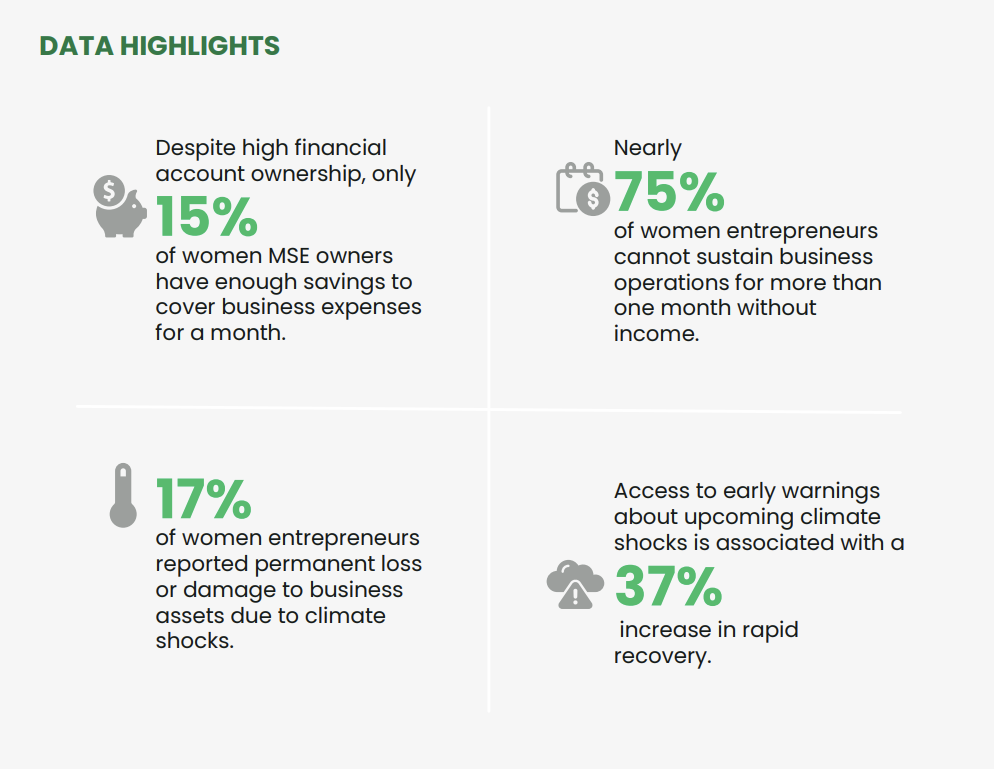
The report finds that:
- Only15% of women MSE owners have enough savings to cover business expenses for a month. 
- Nearly 75% of women entrepreneurs cannot sustain operations for more than a month without income. 
- 17% of women entrepreneurs reported permanent losses or damage to their business due to climate shocks
- Access to early warnings about upcoming climate shocks is associated with a 37% increase in rapid recovery.

Authors

??????????????????????????????????????????????????????????????????????????????????????????????????????????????????????????????????????????????????????????????????????????????????????????????????????????????????????????????????????????????????????????????????????????????????????????????????????????????????????????????????????????????????????????????????????????????????????????????????????????????????????????????????????????????????????????????????????????????????????????????

Anindita Chakraborty

Director, Research and Strategy​

Anindita is an inclusive finance specialist with eleven years of experience undertaking research, ratings, client protection certifications, program implementation, training, and evaluation across multiple countries in Asia and Africa. She works closely with CFI’s Managing Director and leadership team on fundraising, operationalizing CFI’s strategy, internal knowledge management, and organizational processes.

Before joining CFI in October 2020, Anindita worked as an evidence and insights fellow at the UN Foundation’s Digital Impact Alliance (DIAL), where she helped develop a category management guide to enable developing country governments to strategically procure digital technologies. Anindita has worked for several financial inclusion organizations, including Dvara Finance, M-CRIL LLP, and Entrepreneurial Finance Lab (now LenddoEFL). While working as the partner success manager at Entrepreneurial Finance Lab, she helped financial institutions in India and Nepal adopt psychometric credit scoring to safely accelerate lending to low-income households and enterprises.

Anindita graduated from Columbia University School of International and Public Affairs (SIPA) with an MPA in economic and political development. She also holds a post-graduate degree in management from the Institute of Rural Management Anand (IRMA) and an undergraduate degree in information technology from the Institute of Engineering and Management (IEM). Anindita is fluent in English, Bengali, and Hindi.

Edoardo Totolo

Deputy Managing Director

Edoardo oversees CFI’s thought leadership in the thematic areas of financial consumer protection, responsible data practices, and green inclusive finance.

Prior to joining CFI, Edoardo worked for IFC’s venture capital team in Washington, D.C., where he promoted enabling environments and investment opportunities in embedded finance, startup ecosystems, and the digital economy. He also worked for the World Bank’s global financial inclusion unit, assisting regulators in leveraging data and developing strategies for financial inclusion and consumer protection. Between 2012 and 2018, Edoardo worked in Kenya as Research Economist for Financial Sector Deepening Kenya, a multi-donor program supporting the development of inclusive financial markets. He led flagship nationally representative surveys and provided fintech companies with advanced analytical tools for consumer insights and segmentation.

Edoardo holds a PhD in development economics from the University of Trento and an MSc in international development studies from the University of Amsterdam.

Explore More

Who pays for instant payments?
Brief

Who Pays for Instant Payments?

Sign up for updates

This field is for validation purposes and should be left unchanged.